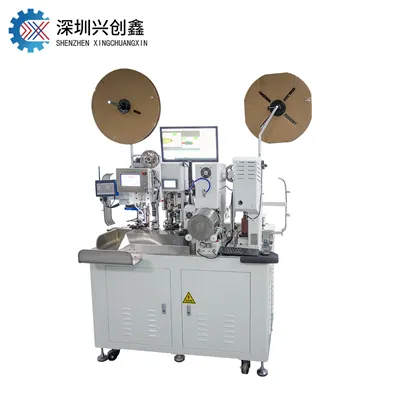
The correct method of crimping mainly includes: selecting appropriate tools, handling wires correctly, fully inserting wires into terminals, using crimping pliers to crimp in the correct position, and checking the crimping quality.
Operation steps:
1. Prepare wires and terminals: Use wire stripping pliers to remove the insulation layer at the end of the wire, exposing about 3 millimeters of the core wire. Ensure that the terminal specifications match the wire specifications.
2. Inserting the wire: Fully insert the stripped wire core into the terminal barrel (crimping area) until it touches the bottom or encounters a stopper.
3. Placement and crimping: Place the terminal that has been inserted into the wire horizontally into the corresponding crimping die (clamp) of the crimping tool. Confirm that the terminal direction is correct (for example, aligning the insulation sleeve with the bare wire end), and then press down the handle of the wire clamp with force until the mold is completely closed or a ratchet release sound is heard.
4. Inspection and repair: Release the crimping pliers and remove the crimped terminals. Check if the connection is secure, if the core wire is cut, and if the crimping shape is uniform. If necessary, cut off excess terminal tail material.
Key points and common problems
1. Crimp height: This is the most critical parameter to ensure connection reliability and should be strictly controlled within the process range specified by the terminal manufacturer. If the crimping height is too small, it may break the core wire, while if it is too large, it may cause poor contact, affecting the conductivity and mechanical strength.
2. Horn mouth: High quality crimping should form a horn mouth at the front end of the terminal crimping area, and its size should be close to twice the thickness of the terminal material. There is a risk of cutting the wire core if the horn mouth is too small or missing, while if it is too large, it will reduce the contact area.
3. Avoid common errors: When crimping, ensure that the terminal is centered in the mold to avoid "banana" shaped bending; Pay attention to the length of the tail material, excessive length may cause electrical faults; Follow the correct crimping direction to prevent damaging the terminals.