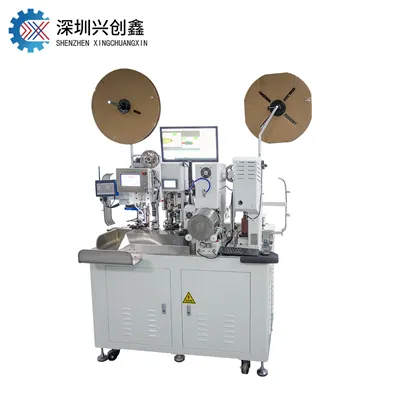
Regular Cleaning
Power off the machine before cleaning.
Remove dust, wire fragments, and debris from the blade area, feeding mechanism, and conveyor belts using compressed air or a soft brush.
Wipe the housing and surfaces with a clean, dry cloth. Avoid corrosive cleaners.
Lubrication
Apply high-quality lubricant to moving parts (e.g., guide rails, bearings) as per the manufacturer's schedule.
Ensure excess grease is wiped off to prevent attracting dust.
Blade Inspection
Check blades weekly for wear or dullness. Replace damaged blades promptly.
Clean blade edges with alcohol to remove adhesive residue or oxidation.
Alignment Calibration
Regularly verify the alignment of feed rollers, cutters, and sensors to ensure precision.
Use calibration tools provided in the manual if stripping length becomes inconsistent.
Electrical Components
Inspect cables and connections for damage. Tighten loose terminals.
Keep control panels dry and free from dust buildup.
Software Updates
Update machine firmware when notified by the manufacturer to optimize performance.
Operational Checks
Before daily use, test-run the machine with scrap wire to confirm smooth operation.
Monitor for unusual noises or vibrations, which may indicate mechanical issues.
Environmental Conditions
Store the machine in a dry, temperature-controlled environment to prevent rust or electronic failure.
Scheduled Professional Maintenance
Arrange annual servicing by certified technicians for in-depth inspections.
Safety Reminder: Always follow the manufacturer's manual and wear protective gear during maintenance.