1. Wire Core Manufacturing
Extrusion Line – For coating the conductive core (usually copper, stainless steel, or carbon fiber) with insulation material (e.g., silicone, EPDM, or PTFE).
Resistance Testing Machine – To measure the electrical resistance of the wire core.
2. Insulation & Sheathing
Secondary Extrusion Machine – Applies an outer insulating layer (often silicone rubber) for heat and abrasion resistance.
RF (Radio Frequency) Curing System – For vulcanizing silicone insulation to enhance durability.
3. Terminal & Connector Assembly
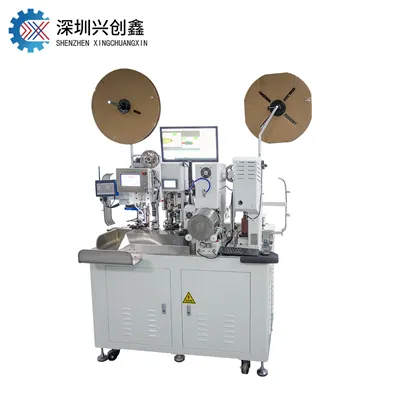
Crimping Machine – Attaches metal terminals (boots, contacts, or spark plug connectors) to the wire ends.
Heat Shrink Tunnel – Applies heat-shrink tubing to seal connections.
Soldering Equipment (Optional) – For some high-performance applications where soldered connections are required.
4. Electromagnetic Shielding (For Suppression Wires)
Braid Machine – Applies a woven metal (e.g., copper or tin-plated) shielding layer to reduce electromagnetic interference (EMI).
Foil Wrapping Machine (Alternative) – For spiral-wound or foil-based shielding.
5. Quality Control & Testing
High-Voltage Tester – Checks insulation integrity under high-voltage conditions.
Continuity Tester – Ensures proper electrical conductivity.
Pull Tester – Verifies terminal crimp strength.
Environmental Test Chamber – Assesses heat, cold, and moisture resistance.
6. Final Assembly & Packaging
Cutting Machine – Trims wires to specified lengths.
Labeling & Printing Machine – Marks wire specifications (e.g., resistance, part number).
Coiling/Packaging Machine – Prepares finished wires for distribution.
Would you like details on a specific part of the manufacturing process?