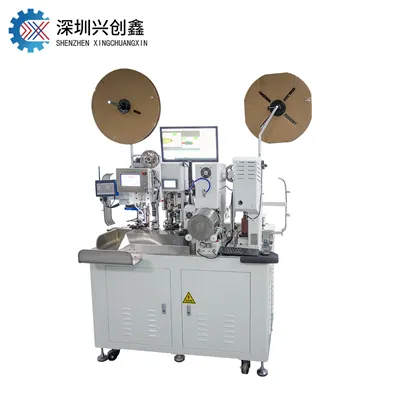
When it comes to cable connection, welding and crimping are two common and reliable methods, but each has its own unique advantages and application scenarios. Equipment that can be used for crimping and welding include semi-automatic soldering machines, terminal crimping machines, wire crimper machine, and other simple small machine-mophorn pneumatic crimping tool am 10. However, which one is more reliable, welding or crimping, and what are their respective advantages? This article will analyze the reliability and advantages of these two methods from the following aspects:
Welding cable
1. Reliability
Electrical connection stability: Welding firmly connects two wires by melting solder, ensuring good electrical contact and low resistance. This reduces power loss and overheating caused by contact resistance.
2. Durability: Welding connections can still maintain their connection strength and stability under high temperature and high vibration environments, and are suitable for extreme environmental conditions.
Advantages
1. Electrical performance: Welding joints generally have lower resistance and higher conductivity, and are suitable for applications with high electrical performance requirements, such as high-frequency signal transmission and precision electronic equipment.
2. Long-term stability: Welding joints are not prone to loosening or poor contact during long-term use, and are suitable for occasions with high long-term reliability requirements.
Crimped cable
1. Reliability
Mechanical strength: Crimping tightly connects the wire and the terminal through mechanical pressure to form a strong mechanical connection with high tensile strength and vibration resistance.
2. Consistency: The crimping operation is easy to standardize, which can ensure the consistency and reliability of each joint, and is particularly suitable for mass production.
Advantages
1. Fast and efficient: Crimping does not require heating or cooling processes, and the operation is simple and fast, suitable for large-scale production line operations, and improves production efficiency.
2. Wide range of applications: Crimping is suitable for various wire and terminal types, and has a wide range of application scenarios, including automotive wiring harnesses, household appliances, and industrial control.
3 Maintainability: Crimped joints are easy to inspect and repair, and are particularly suitable for occasions that require frequent maintenance and inspection.
Overall, welding and crimping each have their own unique advantages and application scenarios:
Welding: Suitable for applications that require high electrical performance and long-term stability, such as high-frequency signal transmission and precision electronic equipment. Its reliability and stability in extreme environments make it the first choice for high-demand applications.
Crimping: Suitable for applications that require high mechanical strength, fast production and maintainability, such as automotive wiring harnesses and industrial control. Its simple operation and high efficiency make it an ideal choice for mass production.
The selection of welding or crimping methods should be comprehensively considered based on specific application needs, environmental conditions, and production requirements to ensure the best connection reliability and performance.