1. Determine Your Production Requirements
Production volume: Calculate your daily/weekly output needs (low, medium, or high volume)
Wire specifications: Note wire sizes (AWG/mm²) and types you'll be processing
Terminal types: Identify all terminal shapes and sizes you need to crimp
2. Consider Machine Types
Manual terminal crimpers: For low-volume production or prototyping
Semi-automatic machines: For medium volumes with some automation
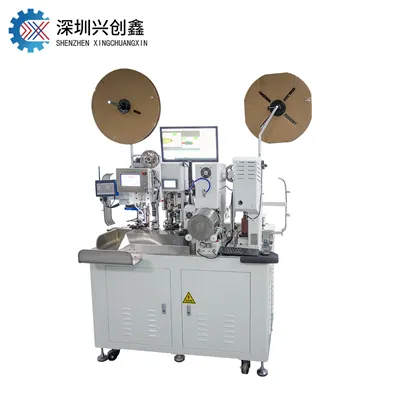
Fully automatic machines: For high-volume, continuous production lines
Benchtop vs. floor models: Based on your available workspace
3. Key Features to Evaluate
Precision and consistency: Look for machines with ±0.01mm accuracy
Changeover time: How quickly you can switch between terminal types
Programmability: Memory functions for different crimping profiles
Quality control: Built-in inspection systems (pull test, optical measurement)
Tooling compatibility: Availability of dies for your specific terminals
4. Technical Specifications
Crimping force: Typically 0.5-10 tons depending on terminal size
Speed: Cycles per minute (CPM) - from 30 CPM for manual to 6,000 CPM for automatic
Power requirements: Pneumatic, electric, or hydraulic options
5. Budget Considerations
Initial purchase price vs. long-term operational costs
Maintenance requirements and spare parts availability
Potential for future upgrades or expansion
6. Vendor Evaluation
Reputation and customer reviews
After-sales service and technical support
Training and documentation provided
Warranty terms and conditions
7. Safety and Compliance
CE, UL, or other relevant certifications
Safety features like emergency stops and protective guards
Compliance with industry standards (IPC/WHMA-A-620)
8. Test Before Purchase
Request a sample crimping demonstration with your actual materials
Evaluate crimp quality through cross-section analysis
Check ease of operation and ergonomics
By carefully considering these factors, you can select a terminal crimping machine that matches your factory's specific needs, ensuring optimal performance and return on investment.