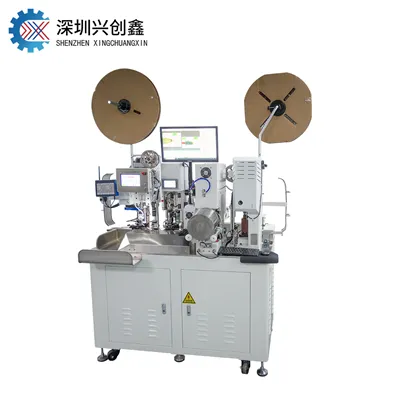
The feeding belt is the most important part. It firmly clamps the wire between two belts and transports it forward at a precise length. With a high‑friction surface, it prevents slipping, twisting, or shifting during feeding, ensuring cutting and stripping length accuracy. Its soft, flexible material protects the wire insulation from scratches or pressure marks, especially for thin, delicate wires. By adjusting clamping pressure, the belt can handle various wire sizes from 0.1 mm² to 16 mm² and above, making the machine widely applicable.
The transmission belt transfers power from the motor to the feeding rollers, cutter assembly, and other moving parts. It maintains stable speed and synchronous movement, reduces noise and vibration, and provides overload protection. If the machine jams or overloads, the belt slips slightly to avoid damaging the motor or internal mechanisms.
Worn or loose belts directly cause inaccurate length, inconsistent feeding, and poor stripping quality. Regular inspection, tension adjustment, and timely replacement of belts are necessary to keep the machine efficient and extend its service life. In short, belts ensure precision, stability, and safety in wire processing.