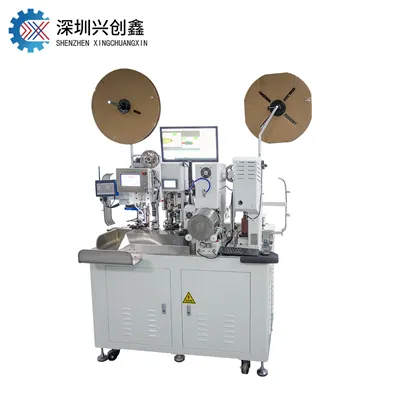
Why that low price tag could be your most expensive mistake
The price difference is hard to ignore. A handheld manual crimping tool costs as little as $200–300. A benchtop pneumatic or semi-automatic machine might run $1,000–2,500. Meanwhile, a quality fully automatic crimping system can cost $8,000–15,000 or more.
When budgets are tight, the lower price looks like a smart decision. But the purchase price is only the beginning. The real cost of a cheap crimping machine is buried in scrap, rework, downtime, failed inspections, and lost reputation-costs that can easily dwarf the initial savings.
The Quality Cost
Cheap machines lack the precision to consistently meet industry standards like IPC/WHMA-A-620. Crimp height varies, pull force drifts, and conductor compression becomes inconsistent. Crimps may look acceptable to the naked eye, but they often fail the measurables-and that's what inspectors and customers care about.
The failure mechanism is predictable: under-crimped connections leave microscopic air pockets between conductor strands and terminal metal. Moisture creeps in, oxidation builds up, and contact resistance climbs from fractions of a milliohm to tens of milliohms. The connection fails slowly-not enough to trigger a warranty claim, but enough to lose customer trust.
Even worse, some operators attempt to "fix" weak crimps by double-pressing. That can reduce tensile strength by up to 40%, creating severe intermittent resistance spikes.
If your harnesses don't meet UL or IPC requirements, entire shipments get rejected. A machine that can't consistently produce spec-compliant crimps doesn't save money-it generates scrap, rework, and compliance risk.
Downtime and Maintenance
Cheap machines use cheaper components-inferior dies, weak bearings, low-grade metals. They wear faster and break more often. Every breakdown stops your production line.
Unplanned downtime is one of the most expensive problems in manufacturing. Large plants can lose over $436,000 per hour when a line stops. Even a modest shop faces hundreds or thousands of dollars in idle labor, delayed orders, and missed deadlines.
Regular calibration is non-negotiable for any crimping machine. Basic calibration services start around $70–$85, with full reporting running $130 or more. A cheap machine drifts out of specification faster, requiring more frequent adjustments.
Spare parts are another trap. Many low‑cost vendors offer little to no local inventory. When a feeder fails during a rush order, waiting days for air‑freighted components while your line sits idle can cost far more than the machine itself.
The Total Cost of Ownership Reality
Consider two common options for a small to mid-size shop over three years:
Budget Pneumatic Machine ($1,500 upfront):
Maintenance and calibration: $600–1,000/year
Scrap rate: 2–3% (poor consistency)
Unplanned downtime: 30–50 hours/year
Rework labor: significant
Total 3-year cost: $5,000–7,500+
Quality Semi‑Auto Machine ($4,500 upfront):
Maintenance and calibration: $200–400/year
Scrap rate: 0.2–0.5% (consistent quality)
Unplanned downtime: minimal
Rework labor: minimal
Total 3-year cost: $5,500–6,500
Fully Automatic Machine ($12,000 upfront):
Maintenance and calibration: $300–500/year
Scrap rate: 0.05–0.1% (excellent consistency)
Unplanned downtime: very minimal
Labor savings: replaces 2–3 operators
Total 3-year cost: $13,000–15,000 (but with 2–3x output)
The price gap between budget and quality semi-auto machines nearly disappears over three years. And when you factor in a single major downtime event-which can easily exceed a few thousand dollars-the cheap machine becomes the more expensive choice.
For fully automatic systems, the higher upfront cost pays back through dramatic labor savings. One machine replacing two or three operators typically achieves payback within 6–12 months in a high-mix production environment.
What to Look For Instead
When evaluating crimping machines, look beyond price:
Precision specifications-crimp height tolerances in microns, not vague ranges
Calibration schedule-clear maintenance intervals and documentation
Local support-on-site response guarantees and spare parts availability
Quality metrics-vendor should discuss scrap rates, yield, and expected maintenance
Compliance capability-demonstrated ability to meet IPC/WHMA-A-620 and UL requirements
Before you buy, ask: What's the expected scrap rate? How often does it need calibration? Can it consistently pass pull-force testing? If the vendor can't answer with data, you're buying a gamble.
A cheap crimping machine is like a cheap parachute-the savings look great until you actually need it to work. The low purchase price is seductive, but the hidden costs of scrap, rework, downtime, compliance failures, and field failures will eat those savings many times over.
For a small shop, spending $4,000–5,000 on a quality semi-auto machine instead of $1,500 on a budget unit often costs about the same over three years-and delivers far less headache, higher quality, and better customer satisfaction.
For larger operations, fully automatic systems pay for themselves quickly through labor savings and consistency.
The smart investment isn't the cheapest machine. It's the one that delivers consistent, spec-compliant crimps day after day, backed by local support and documented quality. Because the most expensive crimping machine you can buy is the one that doesn't work.