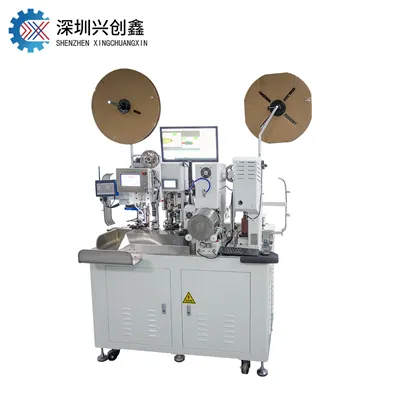
In today's technology-driven world, data cables have become an integral part of our lives. From charging our smartphones to transferring data between devices, data cables play a crucial role. However, have you ever wondered how these cables are manufactured? Well, the process involves the use of advanced machinery, including wire strippers, soldering machines, injection molding machines, cable tie machines, and testing machines.
Firstly, the wire stripping machine are used to strip the insulation from the wires to ensure that they remain exposed for soldering. These machines are equipped with sharp blades that cut the insulation smoothly without damaging the wires.

Next, soldering machines are used to connect the stripped wires to the connectors. These machines heat the soldering material to a point where it melts, and the wires and connectors are joined together. This process ensures that the wires remain securely connected and do not break off during use.

Once the wires are connected to the connectors, injection molding machines are used to mold the sheath around the connectors. These machines are designed to inject molten plastic into a mold and then cool it down to create a perfect shape. The process ensures that the wires remain protected and do not break off during use.

To keep the cable organized, cable tie machines are used to bundle the wires together. These machines wrap a plastic tie around the cables, keeping them in place.

Finally, testing machines are used to ensure that the final product meets the required quality standards. These machines test the cables for resistance, conductivity, and voltage levels, ensuring that they are safe for use.

With the use of advanced machinery, manufacturers can produce high-quality data cables that are durable and reliable. The combination of modern technology and skilled expertise has enabled manufacturers to raise the bar in cable production, ensuring that consumers have access to the best products on the market.
In conclusion, the production of data cables involves the use of various machines, including wire strippers, soldering machines, injection molding machines, cable tie machines, and testing machines. With these machines, manufacturers can produce high-quality data cables that are reliable, durable, and safe for use.