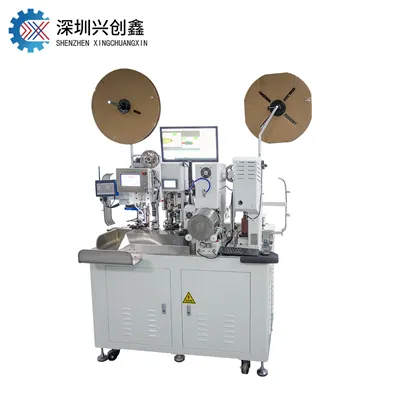
The printing of marking tubes is a core process in electrical wire harness processing and is widely used in high- and low-voltage switchgear, industrial control, and new energy power equipment. The clarity and durability of the markings directly affect wiring efficiency, quality traceability, and later operation and maintenance safety. At present, the industry mainly relies on two automated processes-hot stamping and laser marking-which are suitable for different production scenarios and project standards. This article provides a concise analysis of the core differences between the two processes, offering a professional reference for enterprises in selecting wire harness production processes.
I. Core Industry Pain Points
Durability and quality control standards have become a major shortcoming in improving the quality and efficiency of wire harness processing.
II. Core Analysis of Two Mainstream Printing Processes
1.Hot Stamping Process (General-Purpose Mass Production Type)
Traditional manual and standalone printing modes generally suffer from problems such as markings being prone to wear and falling off, poor batch consistency, high consumable costs, and low changeover efficiency, making it difficult to balance the cost requirements of conventional mass production with those of high-end power projects.
Hot stamping relies on high-temperature molten ribbon to transfer characters onto the surface of the marking tube, making it a highly versatile and mature process. Its advantages include flexible changeovers, clear printing, and compatibility with most conventional tubes. It is suitable for the electrical industry's mass production needs involving multiple varieties and small batches, with high equipment stability, simple operation and maintenance, and low investment costs. Its shortcomings include the need for regular ribbon replacement, resulting in consumable costs, and surface-transferred markings being prone to slight wear under harsh working conditions. It is only suitable for conventional industrial control and ordinary switchgear projects.
2.Laser Marking Process (High-End Precision Type)
Laser marking adopts non-contact carbonization engraving technology, requires no consumables, and forms permanent markings through surface modification of the tubing. This process offers high printing precision, markings that resist high and low temperatures, friction, and corrosion, and excellent batch consistency. It does not damage the wire harness or the tubing itself, resulting in a high yield rate. It is mainly suitable for high-standard projects such as power grids, new energy, rail transit, and outdoor power equipment. Its only drawbacks are the relatively high initial equipment investment and a processing speed slightly lower than that of the hot stamping process.
1.Hot Stamping Printing Process (General-Purpose Mass Production Solution)
Hot stamping is a mature traditional marking process in the industry. The equipment heats a ribbon at high temperature to thermally transfer toner characters onto the surface of PVC and heat-shrink marking tubes, offering fast forming speed and broad compatibility.
2.Laser Marking Printing Process (High-End Durable Solution)
Laser marking is a consumable-free, non-contact precision marking process. Relying on a high-precision laser beam, it performs instantaneous carbonization engraving on the surface of marking tubes such as PVC and heat-shrink tubing. It requires no ribbon, ink, or any other consumables, and forms permanent markings through surface modification of the material. It is the preferred marking solution for the high-end power and new energy industries.