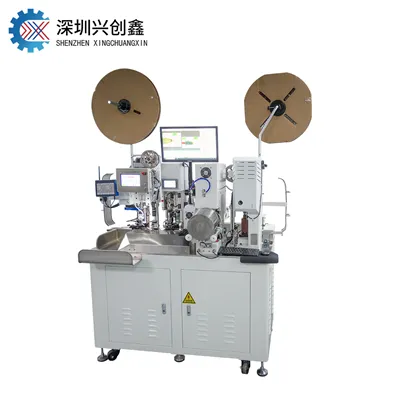
In wire harness production, changeover time is one of the most overlooked sources of hidden cost. Every time you switch from one terminal or wire gauge to another, the crimping line stops. Dies come out, new dies go in, alignment is checked, test crimps are run, settings are adjusted-and only then does production resume.
For shops running high-mix, low-volume orders, this happens multiple times a day. The machine may be capable of thousands of crimps per hour, but if it sits idle for 30–60 minutes between jobs, that capacity is wasted.
Quick-change tooling is the fix. Here's how it works-and why it matters.
The Real Cost of Slow Changeover
Changeover time isn't just idle machine time. It compounds:
Lost output - 45 minutes of changeover, three times a day, is over two hours of lost production-every day.
Labor cost - skilled operators spend time swapping and adjusting instead of producing.
Setup scrap - every changeover produces test crimps and rejected parts while settings are dialed in.
Human error - manual die changes and adjustments are a common source of misalignment, wrong crimp height, and quality defects.
Scheduling inflexibility - long changeovers discourage small batch sizes, forcing you to run larger batches and carry more inventory.
If your team avoids short runs because "the changeover isn't worth it," slow tooling is already costing you orders.
What Is Quick-Change Tooling?
Quick-change tooling is a system designed to reduce the time and skill required to swap dies, applicators, or terminals on a crimping machine.
Common features include:
Tool-free or single-tool die changes - no more hunting for hex keys and adjusting multiple screws.
Pre-aligned die holders - dies seat in a fixed position, eliminating manual alignment.
Repeatable mounting - the same die goes back to the same position every time, so settings don't drift.
Quick-release clamps and locking mechanisms - secure the die without over-tightening or guesswork.
Standardized interfaces - different die sets share the same mounting footprint, simplifying changeovers.
The goal is simple: make changeover fast, repeatable, and operator-friendly-without sacrificing crimp quality.
How Quick-Change Tooling Improves Quality
Speed is only half the benefit. Quick-change tooling also improves consistency.
Repeatable alignment. When dies seat in a fixed, pre-aligned position, crimp height and centering don't change from one setup to the next. This reduces setup scrap and the risk of misaligned crimps.
Fewer adjustment errors. Manual die changes invite over-tightening, uneven clamping, and incorrect seating. Quick-change systems reduce these risks.
Faster first-good-part. Because settings are repeatable, operators spend less time dialing in crimp height and running test crimps.
Better traceability. Some quick-change systems include die identification, so the machine knows which tooling is installed and can load the correct settings automatically.
Where Quick-Change Tooling Pays Off
It's most valuable in operations with:
Frequent job changes - high-mix, low-volume production
Multiple wire gauges and terminal types - frequent die swaps
Skilled labor shortages - less dependence on experienced setup technicians
Short lead times - faster changeovers mean faster order turnaround
Small batch sizes - economical to run smaller lots without long setup
For a shop running one product all day, the benefit is smaller. For a shop running five different jobs a day, it can be transformative.
What to Look For
When evaluating a crimping machine or upgrading tooling, check for:
Tool-free or single-tool die changes
Pre-aligned, repeatable die mounting
Quick-release clamping
Compatibility with your terminal and applicator range
Clear documentation and training
Availability of spare die holders and wear parts
Also confirm that quick-change tooling doesn't compromise crimp force monitoring or calibration-quality control should remain intact.
Changeover time is a silent cost. It doesn't show up on an invoice, but it shows up in lost output, setup scrap, and missed deadlines.
Quick-change tooling cuts that cost by making die changes fast, repeatable, and less dependent on operator skill. For high-mix manufacturers, it's not a convenience-it's a competitive advantage.