n the fields of new energy and industrial equipment manufacturing, wire harnesses serve as the essential medium for power transmission and signal exchange. They are widely used in applications such as automotive systems, construction machinery, outdoor
telecommunications, and energy storage equipment-environments frequently exposed to moisture, condensation, and rain. If a wire harness is not properly waterproofed, moisture ingress can damage the cable's insulation, leading to electrical leakage, short circuits, or signal anomalies. At best, this causes intermittent equipment downtime and reduced productivity; at worst, it creates serious safety hazards, resulting in high after-sales costs and project losses.
Automotive chassis wiring is a prime example: exposed to constant mud and water splashes, inadequate waterproofing can cause vehicle electronic modules to malfunction or trigger erroneously, directly compromising driving safety. Similarly, for wire harnesses within outdoor base stations or energy storage systems, a failure in the waterproof seal can disrupt signal transmission, cause unstable communication or power interruptions, and shorten the overall service life of the equipment.
Waterproofing is not a single step but a comprehensive, integrated manufacturing process; the precision of each stage determines the final sealing performance. Procedures such as installing waterproof plugs, sealing terminals, overmolding, and applying heat-shrink tubing demand high levels of stability and precision from the processing equipment. Manual assembly is prone to errors-such as missing waterproof plugs, improper crimping, or loose seals-which create latent risks of future waterproofing failure.
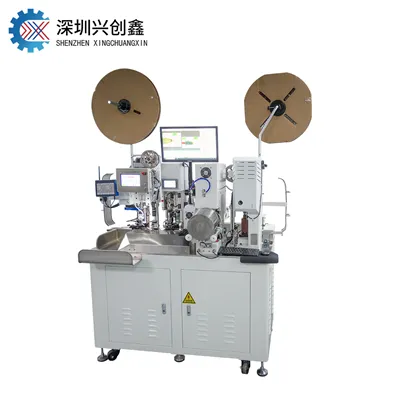
Utilizing specialized automated wire harness processing equipment ensures consistent execution of tasks like waterproof plug installation, terminal crimping, and wire cutting and stripping. This guarantees the uniformity of the sealing structure across every harness, minimizes human error, and mitigates the risk of water ingress at the source. For manufacturers, this helps improve product pass rates and establishes a competitive edge in a crowded market.
By prioritizing end-to-end process control and standardizing every step of the manufacturing workflow, you can ensure that your wire harnesses perform reliably in complex, demanding environments-ultimately making your products more competitive within the industry.