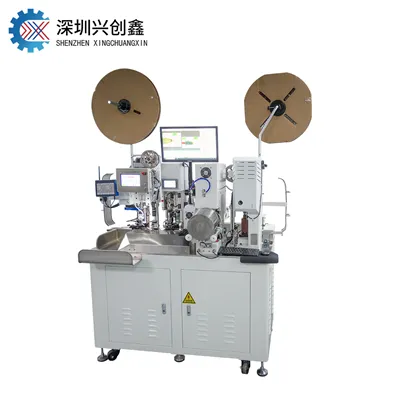
Wire stripping is the process of removing insulation from a wire or cable to expose the conductor for electrical connection or further processing. If you are searching for what is wire stripping, it is an essential step in electrical wiring and wire harness manufacturing. A properly controlled wire stripping process helps prepare wires for crimping, soldering, and terminal connections while reducing the risk of conductor damage and poor electrical contact.
Wire stripping can be performed manually or with specialized equipment, depending on production volume, wire specifications, and precision requirements. Different applications may require single-end stripping, double-end stripping, or partial insulation removal in the middle of a wire.
In this guide, we will explain the main types of wire stripping, common stripping methods, key quality requirements, and the applications of wire stripping machines in modern manufacturing.
1. What Is Wire Stripping and Why Is It Necessary?
Wire stripping is an essential preparation step in electrical wiring and wire harness manufacturing. Understanding the wire stripping definition helps explain why insulation must be removed carefully before a wire can be connected to a terminal, soldered to a component, or assembled into an electrical connector. The goal is to expose the required section of the conductor without damaging the metal strands or solid core.
What Does Wire Stripping Mean?
Wire stripping is the controlled removal of insulation from a specific section of a wire or cable. Three components are important to understand:
Conductor: The metal core, usually made of copper or aluminum, that carries electrical current.
Insulation: The nonconductive material surrounding the conductor to prevent unintended electrical contact and protect against short circuits.
Cable jacket: The outer protective covering of a cable that may contain multiple insulated wires and provide additional mechanical or environmental protection.
Wire stripping does not necessarily mean removing every outer layer. Depending on the cable construction and application, the process may involve removing individual wire insulation, a section of the outer jacket, or both in separate operations.
Why Do Wires Need to Be Stripped?
If you are wondering what is wire stripping used for, its primary purpose is to prepare the conductor for a reliable electrical connection. Exposed conductors can be used for terminal crimping, soldering, screw-terminal connections, and connector assembly.
The stripping length must match the requirements of the terminal or connection method. If too much insulation remains, the conductor may not make proper contact. If too much insulation is removed, excess bare conductor may increase the risk of short circuits or reduce mechanical protection.
Conductor integrity is equally important. Nicked, cut, or missing strands can reduce the effective conducting area and weaken the connection. Properly controlled wire insulation removal helps achieve consistent stripping lengths, preserve conductor quality, and support reliable downstream assembly.
2. How Does the Wire Stripping Process Work?
The wire stripping process involves more than cutting through insulation and pulling it away. To achieve consistent results, operators must identify the wire specifications, determine the required stripping length, select an appropriate stripping method, and inspect the exposed conductor. Each step affects the quality of the finished wire and its suitability for subsequent operations, such as crimping, soldering, or connector assembly.
Step 1 - Identify the Wire and Insulation
Start by checking the conductor material, wire diameter, strand construction, and insulation material. Single-core wires, multiconductor cables, coaxial cables, and shielded cables have different structures and processing requirements. For example, stranded copper wires require careful handling to prevent individual strands from being cut or pulled out during stripping.
Step 2 - Set the Required Stripping Length
The stripping length is the length of insulation removed to expose the conductor, whereas the overall wire length is the total length of the wire from end to end. Set the stripping length according to the terminal dimensions, connector design, or downstream process requirements. An incorrect setting can lead to poor connections or exposed conductor beyond the intended contact area.
Step 3 - Cut the Insulation Without Damaging the Conductor
Depending on the selected equipment, blades or other stripping mechanisms cut, separate, or remove the insulation. If the cutting depth is too shallow, insulation may remain attached to the conductor. If it is too deep, the tool may nick, cut, or remove conductor strands, potentially compromising electrical and mechanical performance.
Step 4 - Remove the Insulation and Inspect the Result
Remove the loosened insulation and inspect the exposed conductor for damaged strands, uneven edges, and residual insulation. Measure the stripping length against the specified tolerance. For multilayer or shielded cables, each layer may require separate positioning and controlled removal to avoid damaging the underlying insulation, shielding, or conductor.
Following these wire stripping techniques helps manufacturers maintain consistent preparation quality before wires move to crimping, soldering, or final assembly.
3. What Are the Different Types of Wire Stripping?
Wire stripping can be classified according to where the insulation is removed from the wire. The three common types are single-end stripping, double-end stripping, and middle stripping, also known as window stripping. Understanding these configurations helps manufacturers select the right processing method for different wire harnesses, electrical connections, and assembly requirements. The main difference is the location and length of the exposed conductor, rather than simply the type of stripping tool used.
Single-End Stripping
Single-end wire stripping removes insulation from one end of a wire while leaving the other end insulated. It is commonly used for conventional electrical wiring, terminal crimping, connector installation, and repair work. This configuration is suitable when only one end needs to be connected to a terminal or electrical component. The stripping length depends on the terminal design and the required connection method.
Double-End Stripping
Double-end wire stripping removes insulation from both ends of the same wire. It is widely used in wire harness manufacturing, automotive wiring, electrical assemblies, and applications requiring connections at both ends. The stripping lengths do not have to be identical: one end may require a longer exposed section for a particular terminal, while the other needs a shorter section for a different connector. Automatic wire processing machines can help maintain consistent lengths at both ends during repetitive production.
Middle Stripping or Window Stripping
Middle stripping, also called window stripping, removes insulation from a specified section in the middle of a wire without cutting through the conductor. This creates an exposed area for a connection, splice, or other specialized operation while keeping the wire continuous. It is used in selected wire harness designs and electrical assemblies where a connection must be made along the wire rather than at an endpoint. The appropriate stripping position and length depend on the circuit design, connection method, and applicable manufacturing requirements.
Choosing the correct stripping configuration helps ensure that wires are prepared for their intended connections while preserving conductor integrity and meeting assembly specifications.
Recommended visual: Three Types of Wire Stripping

Comparison of Wire Stripping Types
|
Type |
Stripping location |
Typical purpose |
|
Single-end stripping |
One end of the wire |
Terminal connection, connector installation, and repair |
|
Double-end stripping |
Both ends of the wire |
Wire harness production and two-ended electrical assembly |
|
Middle/window stripping |
A specified section along the wire |
Mid-wire splicing and specialized electrical connections |
4. Which Wire Stripping Methods Are Commonly Used?
Different wire stripping methods are suited to different wire specifications, production volumes, and processing requirements. While stripping configurations describe where insulation is removed, stripping methods describe how the insulation is removed. Common options include manual tools, mechanical or semi-automatic equipment, fully automatic wire stripping machines, and specialized processes designed for complex cables. Choosing the right method helps manufacturers balance processing accuracy, production efficiency, and equipment cost.
Manual Wire Stripping Tools
Manual wire stripping tools are commonly used for electrical repairs, field wiring, maintenance, and small-batch assembly. Handheld strippers use appropriately sized cutting openings or adjustable mechanisms to separate insulation from the conductor. They are flexible and require relatively little equipment investment, but results depend heavily on operator skill. Selecting a tool that matches the wire size and insulation type is essential to avoid nicked conductors, cut strands, or incomplete insulation removal.
Mechanical and Semi-Automatic Wire Stripping
Mechanical and semi-automatic systems use blades, feeding mechanisms, or other controlled components to perform stripping operations. In a semi-automatic setup, an operator typically loads and positions the wire while the machine executes the programmed or mechanically controlled stripping cycle. These systems are useful for repetitive tasks, moderate production volumes, and operations that require greater consistency than manual processing.
Automatic Wire Stripping Machines
An automatic wire stripping machine uses programmed settings and automated feeding or stripping mechanisms to process wires with repeatable parameters. Depending on the model, it may support automatic cutting, single-end or double-end stripping, and integration with additional wire processing functions. These capabilities are model-dependent, so buyers should verify wire size ranges, stripping configurations, processing speed, and changeover requirements before selecting equipment.
Specialized Stripping for Coaxial and Shielded Cables
Coaxial and shielded cables may contain several layers, including an outer jacket, metallic shielding, dielectric insulation, and a central conductor. Specialized stripping equipment controls the position and depth of each operation to expose the required layers without damaging the underlying structure. These applications often require cable-specific tooling and carefully defined processing parameters.
Wire Stripping Methods: Comparison Table
|
Method |
Typical applications |
Operation |
Repeatability |
Equipment complexity |
|
Manual tools |
Repairs, field wiring, small batches |
Hand-operated |
Depends on operator skill |
Low |
|
Mechanical / semi-automatic |
Repetitive production, moderate volumes |
Operator loads wire; machine performs stripping |
Generally more consistent with correct setup |
Low to medium |
|
Automatic machines |
High-volume wire processing and harness production |
Programmed feeding and stripping cycles |
High when correctly configured and maintained |
Medium to high |
|
Specialized cable stripping |
Coaxial, shielded, and multilayer cables |
Controlled removal of specific layers |
Depends on tooling and process control |
Application-dependent |
5. What Determines Wire Stripping Quality?
Wire stripping quality directly affects the reliability of downstream operations, including terminal crimping, soldering, and connector assembly. A wire may look properly stripped at first glance but still have hidden defects, such as damaged conductor strands or small pieces of insulation left behind. To achieve consistent results, manufacturers should evaluate stripping dimensions, conductor condition, insulation removal, and the factors that influence the stripping process.
Stripping Length and Position
Stripping length determines how much conductor is exposed, while stripping position determines where the exposed section begins and ends. If the stripped section is too short, insulation may interfere with terminal crimping or prevent the conductor from reaching the required contact area. If it is too long, excess bare conductor may remain outside the terminal, increasing the risk of unintended electrical contact. Acceptance dimensions should follow engineering drawings, terminal specifications, and applicable customer requirements.
Conductor Damage and Stray Strands
During stripping, blades that cut too deeply may nick the conductor, sever individual copper strands, or weaken the wire core. Strands may also spread apart if the stripping action is unsuitable for the conductor construction. These defects can reduce the effective conducting area and affect connection strength. Inspect the exposed conductor under adequate lighting, paying attention to cut strands, visible notches, and loose or missing wires.
Incomplete Insulation Removal
Residual insulation can interfere with electrical contact and prevent the conductor from seating correctly in a terminal. Incomplete cuts or torn insulation may also create uneven stripping edges. Check the entire stripped section to confirm that insulation has been removed cleanly and that the remaining insulation is not excessively damaged.
Wire Material, Blade Condition, and Machine Settings
Different insulation materials and conductor structures respond differently to cutting and pulling forces. Worn or incorrectly positioned blades, unstable wire feeding, and unsuitable stripping parameters can all produce inconsistent results. Regular tool inspection, correct machine setup, and sample testing help maintain reliable processing quality, especially in repetitive production.
Wire Stripping Defects: Causes and Inspection Methods
|
Defect |
Possible cause |
What to inspect |
|
Conductor damage |
Incorrect blade depth or blade alignment |
Look for nicks, cuts, and damaged strands |
|
Residual insulation |
Insufficient cutting depth or incomplete stripping |
Check the full stripped section for remaining insulation |
|
Inconsistent stripping length |
Unstable feeding, positioning, or machine settings |
Measure multiple samples and compare them with specifications |
|
Stray or spread strands |
Unsuitable stripping action or conductor handling |
Check for loose, missing, or separated strands |
|
Torn or uneven insulation edge |
Unsuitable blade condition or insulation properties |
Inspect the cut edge and adjacent insulation for tearing |
6. Where Is Wire Stripping Used in Manufacturing?
Wire stripping is a fundamental step in many manufacturing processes that involve electrical connections and cable assemblies. From automotive wiring harnesses to industrial control systems, removing insulation at the correct position allows conductors to be connected to terminals, connectors, and other electrical components. The specific wire stripping applications vary depending on wire construction, production volume, and connection requirements. In industrial manufacturing, consistent stripping quality is particularly important when large numbers of wires must be processed to the same specifications.
Automotive Wire Harness Manufacturing
In automotive production, wire harness processing involves preparing wires for connectors, terminals, splices, and harness branches. Wires may require stripping at one or both ends before terminal crimping and connector assembly. High-volume production often benefits from automatic wire processing equipment that maintains consistent stripping lengths across repeated operations. For more complex harnesses, selected wires may also require specialized mid-wire processing.
Electrical Appliances and Electronic Equipment
Household appliances, industrial electronics, and electronic equipment contain internal wiring for power delivery, signal transmission, and component connections. Wire stripping prepares these conductors for terminal blocks, circuit connections, and connector installation. Different wire sizes and insulation materials require appropriate stripping settings to prevent conductor damage and ensure reliable assembly.
Industrial Control Panels and Electrical Systems
Control cabinets and electrical panels contain wires connecting controllers, relays, sensors, circuit breakers, and terminal blocks. Accurate stripping helps ensure that conductors fit correctly into their designated connection points. For panel builders handling many wires with different lengths and specifications, repeatable processing can simplify assembly and reduce manual rework.
Power Cables and Specialized Cable Assemblies
Power cable and specialized cable assembly applications may involve larger conductors, multiple insulated cores, coaxial structures, or metallic shielding. These cables can require different tools and controlled removal of individual layers. For example, shielded cables may need the outer jacket, shielding, and inner insulation processed separately, while larger conductors require tools suited to their size and construction.
Across these industries, selecting the appropriate stripping method helps manufacturers prepare wires for reliable downstream connections and maintain consistent production quality.
7. When Should You Use an Automatic Wire Stripping Machine?
Choosing between manual tools and an automatic wire stripping machine depends on production volume, wire specifications, quality requirements, and the time required for each operation. Manual stripping remains practical for occasional jobs, while automated equipment can improve consistency and throughput when manufacturers process large quantities of similar wires. The right choice should be based on actual production needs rather than automation level alone.
When Manual Stripping Is Sufficient
Manual wire stripping tools are often suitable for electrical repairs, field wiring, maintenance, and small batches involving many different wire types. They require relatively little initial investment and allow operators to handle occasional jobs without dedicated machine setup. For low-volume production, manual stripping may be sufficient when operators can consistently meet the required stripping dimensions and conductor quality standards.
When Automation Can Improve Production
Automation becomes more attractive when operators repeatedly strip the same or similar wires throughout a production shift. A suitable automatic machine can reduce repetitive manual work, maintain more consistent stripping lengths, and increase processing throughput. A wire cutting and stripping machine may also combine cutting to length with stripping operations, reducing separate handling steps. Actual productivity depends on wire specifications, machine capabilities, setup time, and material feeding requirements.
What to Check Before Choosing a Machine
Before purchasing wire stripping equipment, prepare the following information:
Wire specifications: Conductor material, cross-sectional area, wire diameter, and insulation outer diameter.
Insulation and cable structure: Material type, thickness, number of layers, and shielding requirements.
Stripping requirements: Single-end, double-end, or middle stripping, including required lengths and stripping depth.
Production needs: Target output, batch size, and frequency of product changeovers.
Downstream operations: Whether the wire also requires terminal crimping, twisting, or other processing.
Matching these requirements to the machine's actual capabilities helps avoid unsuitable equipment and supports a more efficient production workflow.
Manual Tools vs. Automatic Wire Stripping Machines
|
Consideration |
Manual tools |
Automatic machine |
|
Production volume |
Low or occasional |
Repetitive or higher-volume production |
|
Operator involvement |
High for each wire |
Lower for repeated processing after setup |
|
Consistency |
Depends heavily on operator technique |
More repeatable with correct settings and maintenance |
|
Product changeovers |
Usually simple for varied small jobs |
May require parameter adjustments or tooling changes |
|
Additional functions |
Generally limited |
Some models combine cutting, stripping, or other operations |
|
Initial investment |
Generally lower |
Generally higher |
8. Frequently Asked Questions About Wire Stripping
Understanding the basics of wire stripping helps manufacturers prepare wires correctly for electrical connections and downstream assembly. The following frequently asked questions explain the purpose of stripping, how it differs from other wire processing operations, and why the distinction matters in manufacturing.
What Is the Main Purpose of Wire Stripping?
The main purpose of wire stripping is to remove insulation from a specified section of a wire, exposing the conductor for electrical connections, terminal crimping, soldering, or connector assembly. Proper stripping helps prepare the wire for a reliable connection while preserving conductor integrity.
Is Wire Stripping the Same as Wire Cutting?
No. Wire stripping removes insulation from a wire without cutting through the conductor, while wire cutting separates the wire to achieve a required overall length. These are different operations, although some automatic wire cutting and stripping machines combine both functions in a single processing cycle.
What Is the Difference Between Wire Stripping and Crimping?
Wire stripping and crimping serve different purposes. Stripping removes insulation to expose the conductor, while crimping mechanically deforms a compatible terminal around the conductor to establish an electrical and mechanical connection. In typical wire harness manufacturing, the wire is stripped before the terminal is crimped. Correct stripping length and intact conductor strands help prepare the wire for a quality crimp.
Conclusion: Wire Stripping Is the First Step Toward Reliable Wire Connections
Wire stripping is a fundamental process in electrical wiring and wire harness manufacturing. Achieving reliable results requires choosing the appropriate stripping method, protecting the conductor from damage, and setting the stripping length according to terminal specifications and downstream assembly requirements. These factors help improve connection quality, reduce processing defects, and maintain consistent production standards.
For manufacturers handling repetitive or high-volume wire processing, an automatic wire stripping machine or wire cutting and stripping machine can help improve processing consistency and reduce manual handling. The right equipment depends on wire specifications, stripping requirements, and production targets.
Looking for a suitable wire processing solution? Explore XCX Machine's wire processing equipment or contact our team to discuss your wire samples, processing requirements, and equipment options.